The Short Answer: It Depends on What You Have
Key Takeaways
- Clifford’s junk removal in Sacramento diverts 70% of items from landfills through donations and recycling.
- Local charity partnerships ensure donations support community initiatives like housing and job creation.
- Cleaning and sorting items before pickup increases the chances of donations over landfilling.
- Hazardous materials require special disposal; local landfills accept limited household waste free of charge.
- Choosing a junk removal company with community connections makes a positive impact on waste management.
Most people assume their old couch goes straight to a landfill the moment a junk removal truck pulls away in Sacramento. The truth is more interesting — and in many cases, a lot more meaningful.
As a junk removal Sacramento operator serving both residential and commercial customers, I can tell you exactly what happens to your stuff after we haul it away. Because we see it every single day.
The Short Answer: It Depends on What You Have
When we pick up a load, it generally goes one of three places:
- Donated — about 50% of what we collect
- Recycled — around 20%
- Landfill — the remaining 30%
That means roughly 70% of what we haul never touches a landfill. Most customers are genuinely surprised to hear that.
Where the Donations Go
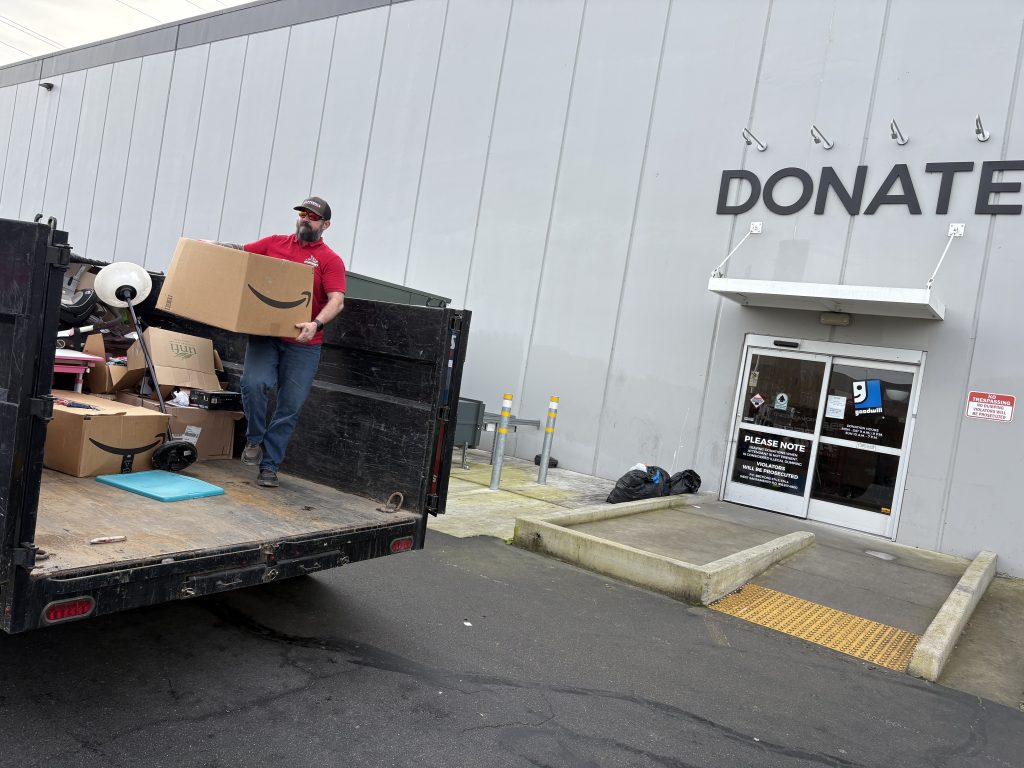
We’ve built real relationships with thrift organizations that do important work in our community. When we pick up furniture, household goods, and other usable items, they go to:
- Snowline Hospice thrift stores (three locations in our area)
- Goodwill
- St. Vincent de Paul
- Habitat for Humanity ReStores — including Foothills Habitat for Humanity in Roseville and Greater Sacramento Habitat for Humanity
That last one matters a lot to me personally. When you drop off an old dresser or a bookshelf at a Habitat ReStore, it goes on the sales floor. When someone buys it, that money funds the construction of homes for families who need them. Your unwanted furniture becomes someone else’s home. That’s not a small thing.
Goodwill donations create jobs. Hospice thrift stores fund end-of-life care. Every truckload we divert from the landfill has a downstream impact that most people never think about.
What Happens to Metal and Appliances
Any metal we collect — whether it’s an old appliance, a filing cabinet, or scrap from a renovation — gets sorted and taken to SIMS Recycling, our dedicated metal recycling partner. Appliances follow the same path.
Electronics and TVs are handled separately. Sacramento County operates an e-waste drop-off program, and that’s where all the screens and electronics we collect end up — properly recycled rather than leaching into a landfill.
A Real Example: The Medical Office Cleanout
Not every job is a living room full of sentimental furniture. We recently completed a full cleanout for a local GI lab that was relocating. Medical offices accumulate a lot — furniture, equipment, supplies, filing systems — and when they move, they just need it gone. Fast.
The client didn’t particularly care where it went. They had a deadline and a new space to move into. That’s completely understandable. But even in a job like that, we’re sorting as we go — pulling anything recyclable or donatable before the rest heads to the transfer station.
The point is: even when customers aren’t thinking about where their stuff ends up, we are.
What Can’t Be Donated (Be Honest With Yourself About This)
Here’s something I wish more people knew before they call us: not everything can be donated, no matter how good it looks to you.
The items that are hardest to place include:
Large entertainment centers from the 90s. Those massive, heavy, laminate wall units that were built for tube TVs? Almost impossible to donate. No one wants them, and most charity partners won’t take them.
Mattresses and most bedroom furniture. Mattresses in particular are very difficult to donate. Most organizations won’t accept them at all.
Anything with pet hair, pet odor, or stains. This is a big one. Our charity partners are selective — as they should be. If a couch smells like dogs or has visible staining, it gets rejected. It doesn’t matter how structurally sound it is. If we pull up to a donation center and a load looks like trash, they’ll treat it like trash.
This isn’t us being harsh. It’s just reality. The thrift stores have limited space and high standards, and items that can’t be sold don’t help anyone.
What About Hazardous Materials?
We don’t handle hazardous waste — things like paint, chemicals, solvents, or certain batteries. This is actually an important distinction when you’re hiring any junk removal company. Most won’t touch it.
The good news for residents of Placer County and Sacramento County: your local landfill accepts up to approximately 15 gallons of hazardous household waste per day from residents, at no charge. It’s worth a call to confirm current limits, but this is a resource most people don’t know exists.
Why Most Junk Removal Companies Just Landfill Everything
I’ll be straight with you: taking everything to the landfill is easier. Much easier.
When we factor in the extra fuel costs and labor involved in sorting loads, driving to multiple donation centers, and dealing with rejections when a charity is full or decides a piece doesn’t meet their standards — donating costs us more than landfilling. Some days, significantly more.
So why do we do it? Because it’s the right thing to do, and because we built our business around it.
Most junk removal companies don’t have established relationships with Habitat for Humanity, Goodwill, or hospice thrift stores. Those relationships take time to build and require consistent quality. It’s easier to just dump everything and move on.
When you’re hiring a junk removal company, ask them directly: Where does my stuff go? If they can’t name specific donation or recycling partners, there’s a good chance the answer is “the landfill.”
How to Maximize What Gets Donated (Before You Call)
Here’s something you can do right now that will dramatically affect how much of your stuff gets donated versus landfilled: sort and clean before we arrive.
When everything is mixed together — trash bags next to a perfectly good armchair, food waste near a bookshelf — it all starts to look like junk. Donation centers make fast decisions, and first impressions matter.
Simple things that help:
- Separate donation items from actual trash before we show up
- Wipe down furniture — a clean piece has a much better shot at being accepted
- Box and bag loose items — sorted and contained loads read as “cared for”
- Be realistic — if something is truly worn out, stained, or broken, let it go gracefully
We can do a lot, but we’re working fast and we can’t perform miracles on a piece that’s in rough shape.
Why This Matters to Me
I grew up not having a lot. That background makes it genuinely painful to throw away something that still has value. When I started in junk removal, I was saving too much — my wife had to step in and convince me to start donating and selling things instead of holding onto them.
That personal history is part of why we built our business the way we did. When I drop off a load at the Habitat for Humanity ReStore in Roseville, I know that money is going toward building homes for families who need them. That mission resonates with me. It makes the extra trip worth it.
The next time you watch a junk removal truck pull away from your curb, know this: the best operators aren’t just haulers. They’re sorters, donors, and community partners. Your old stuff has more road left in it than you might think.
Looking for junk removal Sacramento residents and businesses can count on? We serve residential and commercial customers across the Sacramento area and are committed to keeping as much as possible out of the landfill. Give us a call.